
The average person wears only 20% of their wardrobe regularly, yet Americans spend $1,700 annually on clothing they barely touch. Upgrading your wardrobe for the new year does not require draining your savings or filling landfills with fast fashion. By implementing a strategic capsule approach, leveraging sustainable shopping methods, and mastering versatile styling techniques, you can transform your closet into a functional, stylish collection while spending 60% less than traditional wardrobe overhauls.
Standing in front of a packed closet thinking “I have nothing to wear” is not just frustrating. It is expensive. That emotional response costs the average household between $800 and $2,000 yearly in impulse purchases that end up unworn.
The new year brings fresh motivation to refresh your style, but conventional wisdom pushes expensive complete wardrobe replacements. This outdated approach ignores the reality that strategic upgrades deliver better results at a fraction of the cost.
This comprehensive guide reveals the exact framework that fashion industry insiders use to maintain versatile, stylish wardrobes without overspending. You will learn the specific budget allocation formulas, quality assessment criteria, and styling multiplier techniques that transform limited resources into maximum style impact.
The Real Cost of Wardrobe Overwhelm
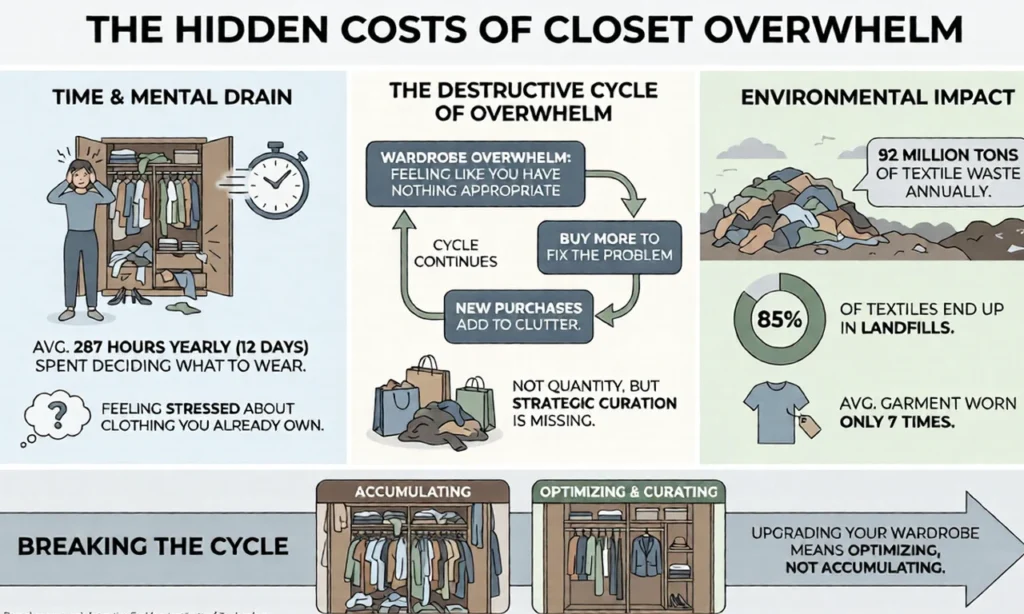
Research from the Fashion Institute of Technology reveals that closet overwhelm costs more than money. It costs time, mental energy, and environmental resources.
The average person spends 287 hours yearly deciding what to wear. That translates to 12 full days standing in front of your closet, feeling stressed about clothing you already own.
Wardrobe overwhelm creates a destructive cycle. You feel like you have nothing appropriate, so you buy more. The new purchases add to the clutter without solving the underlying problem, which is not quantity but strategic curation.
The environmental impact compounds the financial waste. The fashion industry produces 92 million tons of textile waste annually. About 85% of textiles end up in landfills, with the average garment worn only 7 times before disposal.
Breaking this cycle requires understanding that upgrading your wardrobe means optimizing, not accumulating.
Strategic Wardrobe Audit Framework
Before spending a single dollar, conduct a comprehensive closet assessment. This process reveals exactly what you own, what you actually wear, and what gaps truly exist.
Start by removing every item from your closet. Yes, everything. Seeing your entire wardrobe at once provides clarity impossible to achieve otherwise.
Sort items into five categories: Love and Wear Regularly, Like but Rarely Wear, Unsure, Damaged or Poor Fit, and Never Wear. Be brutally honest during this process. Items you have not worn in 12 months probably will not get worn in the next 12 either.
The “Like but Rarely Wear” category deserves special attention. These pieces often represent style aspirations rather than actual lifestyle needs. A formal blazer makes sense for someone attending business meetings regularly but wastes space for a remote worker who video conferences from home.
Document your findings. Take photos of items you love and wear frequently. These represent your actual style preferences, not aspirational purchases. Notice patterns in colors, cuts, fabrics, and styles.
Calculate your cost per wear for favorite items. Divide the original price by the number of times worn. A $200 coat worn 100 times costs $2 per wear. A $50 shirt worn twice costs $25 per wear. This metric revolutionizes how you evaluate future purchases.
The items you rarely or never wear reveal your shopping mistakes. Maybe you consistently buy clothes too tight, hoping to lose weight. Perhaps you purchase trendy pieces that feel uncomfortable in real life. Understanding these patterns prevents future waste.
Sell or donate items in good condition that no longer serve you. This creates both physical space and mental clarity while potentially funding new purchases.
The Capsule Wardrobe Investment Strategy
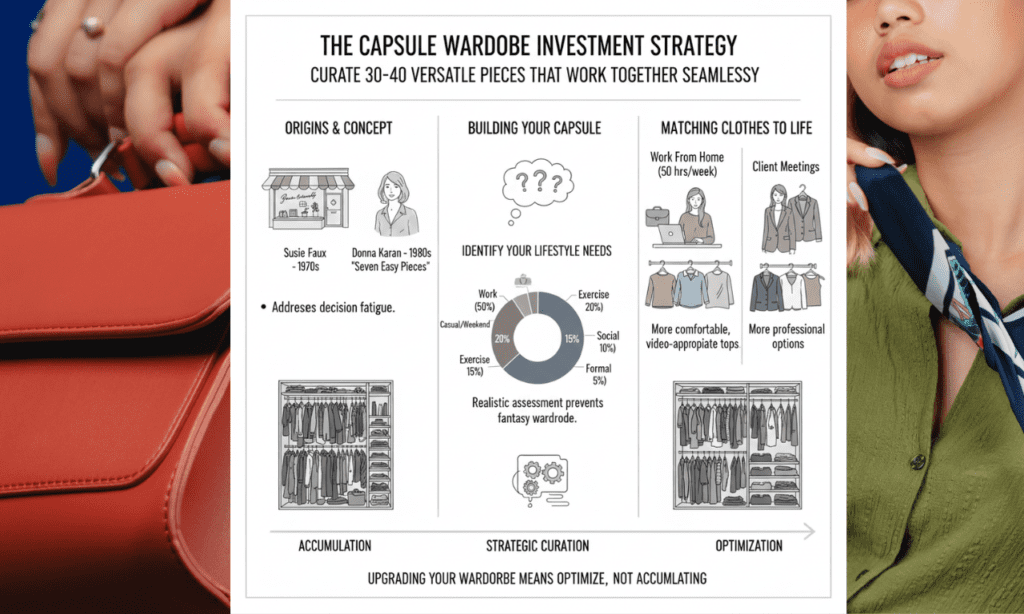
A capsule wardrobe transforms how you approach clothing ownership. Instead of accumulating hundreds of items, you curate 30 to 40 versatile pieces that work together seamlessly.
This approach originated with London boutique owner Susie Faux in the 1970s and gained mainstream attention through Donna Karan’s “Seven Easy Pieces” collection in the 1980s. The concept remains relevant because it addresses the fundamental problem of decision fatigue.
Building an effective capsule requires identifying your actual lifestyle needs. A realistic assessment prevents the common mistake of building a fantasy wardrobe that does not match your daily reality.
Divide your weekly activities into categories and estimate time spent on each. Work activities, casual weekends, exercise, social events, and formal occasions each require appropriate clothing. Your capsule should reflect this distribution.
Someone spending 50 hours weekly working from home needs more comfortable, video appropriate tops and fewer formal business pieces. A person attending client meetings needs professional options but less athletic wear.
Building Your Color Foundation
Select a cohesive color palette that simplifies mixing and matching. Choose two neutral base colors like navy and gray, add two accent colors you genuinely wear like olive and burgundy, and include classic white and black.
This six color foundation allows virtually any top to pair with any bottom, multiplying outfit possibilities exponentially. A 10 item capsule with coordinating colors creates 100+ outfit combinations.
Essential Foundation Pieces
A well fitted pair of dark jeans works for 80% of casual situations. Budget $80 to $150 for quality denim that maintains shape and color through repeated wearing and washing.
A crisp white button down shirt transitions from professional to casual depending on styling. Invest $60 to $100 in a flattering fit made from quality cotton that resists wrinkling.
A versatile blazer in navy or charcoal elevates any outfit instantly. Allocate $150 to $250 for a timeless cut that fits properly through the shoulders and can be professionally tailored.
Quality basics in neutral colors form your wardrobe backbone. These include crew neck tees, v neck sweaters, and simple tank tops. Budget $200 to $300 for 6 to 8 pieces in your color palette.
One pair of classic leather shoes or boots and one pair of clean white sneakers cover most footwear needs. Invest $150 to $250 total for quality options that last multiple years.
Notice the total investment of approximately $700 to $1,150 creates a functional wardrobe with hundreds of outfit combinations. This beats spending $1,700 on trendy pieces that do not coordinate.
Sustainable Shopping Tactics That Save Money
Sustainable fashion is not just environmentally responsible. It is financially smart. The most eco friendly item is the one already in existence, making secondhand shopping both budget conscious and planet friendly.
Thrift stores, consignment shops, and online resale platforms offer incredible value. High quality brands that cost $200+ retail often sell for $20 to $60 secondhand. Designer pieces become accessible at 70% to 90% discounts.
Mastering Thrift Shopping
Successful thrift shopping requires strategy. Visit upscale neighborhood thrift stores where donations reflect higher income demographics. These locations consistently stock better quality brands at standard thrift prices.
Learn to assess garment quality quickly. Check fabric content labels, preferring natural fibers like wool, cotton, linen, and silk over synthetics. Examine seams for tight, even stitching. Test zippers to ensure smooth operation. Inspect for stains, holes, or excessive wear.
Try everything on regardless of size labels. Vintage and secondhand sizing varies dramatically from modern standards. A labeled size 10 might fit like a current size 6.
Online resale platforms like Poshmark, ThredUp, Depop, and The RealReal expand options beyond local stores. Filter searches by brand, size, and condition to find specific items efficiently.
Alternative Sustainable Options
Clothing swaps with friends or community groups offer free wardrobe refreshes. Organize a swap party where everyone brings 5 to 10 items in good condition. Participants trade freely, taking home new pieces without spending money.
The environmental impact of choosing secondhand compounds over time. The fashion industry accounts for 10% of global carbon emissions. Extending a garment’s life by just nine months reduces its carbon, water, and waste footprints by 20% to 30%.
End of season sales at traditional retailers provide another budget friendly option. Purchase winter coats in March or summer dresses in September at 50% to 70% discounts. This requires planning ahead but maximizes value.
Factory outlet stores occasionally offer genuine deals, though many now produce lower quality outlet specific merchandise. Research brands beforehand to identify outlets selling actual overstock rather than separate outlet lines.
Renting formal wear for special occasions prevents purchasing expensive items worn once. Services like Rent the Runway offer designer pieces for a fraction of retail prices.
Smart Styling Techniques for Maximum Versatility
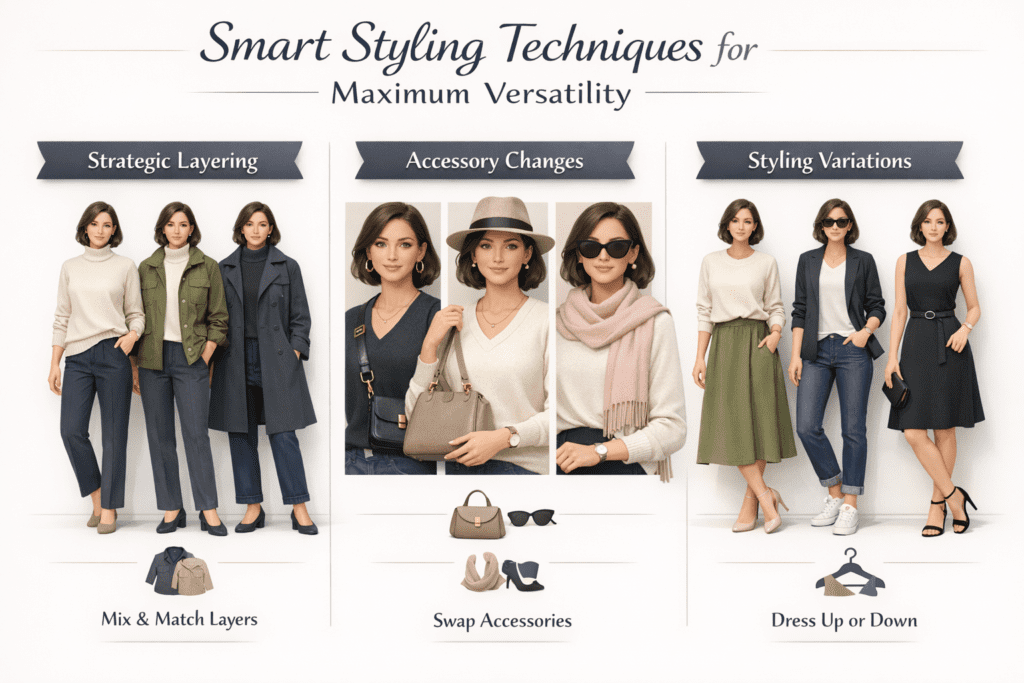
Mastering versatile styling techniques multiplies your wardrobe’s potential without adding items. The same 30 pieces create dramatically different looks through strategic layering, accessory changes, and styling variations.
The Layering Formula
Layering transforms basic pieces into weather appropriate, style forward outfits. A simple white tee becomes a sophisticated look when layered under a blazer, then casual again under a denim jacket.
Learn the layering formula: base layer, middle layer, outer layer. A fitted tee, button down shirt, and cardigan create dimension and visual interest. This approach works across seasons by adjusting fabric weights.
Rolling sleeves, tucking or untucking shirts, and cuffing pants dramatically alter an outfit’s vibe. A button down worn open over a graphic tee with rolled sleeves creates a relaxed weekend look. The same shirt tucked into trousers with a belt reads professionally.
Accessories as Style Multipliers
Accessories function as style multipliers. A simple black dress becomes five different outfits with accessory changes. Pair it with a statement necklace and heels for formal events, a denim jacket and sneakers for casual daytime, a leather jacket and boots for edgy evening style, a cardigan and flats for conservative work settings, or a silk scarf and loafers for polished casual occasions.
Invest in versatile accessories rather than numerous clothing items. A quality leather handbag in a neutral color works year round and lasts for years. Budget $150 to $300 for a timeless style rather than multiple trendy bags at $50 each.
Scarves, belts, and jewelry allow personal expression while maximizing basic items. A $20 scarf transforms the same outfit five different ways, making it more cost effective than another top.
Advanced Mixing Techniques
Learn to mix unexpected elements. Pairing dressy pieces with casual items creates the effortlessly stylish look fashion editors favor. Try combining a blazer with distressed jeans and sneakers for elevated casual, a silk camisole with high waisted jeans and ankle boots for dinner out, or athletic joggers with a crisp button down for comfortable yet polished working from home.
Understanding proportion and silhouette allows mixing pieces effectively. Balance fitted items with looser pieces. Pair skinny jeans with an oversized sweater, or wide leg pants with a fitted top.
Monochromatic dressing in a single color creates elongated, sophisticated looks that appear more expensive than they are. All navy, all gray, or all black outfits look intentionally styled and elegant.
The French wardrobe approach emphasizes quality over quantity and effortless styling. This philosophy prioritizes well fitting basics in neutral colors, minimal accessories chosen carefully, and understated elegance over trend chasing.
Budget Allocation Formula for Wardrobe Success
Smart budgeting prevents overspending while ensuring adequate investment in quality pieces. Financial experts recommend spending no more than 5% of take home income on clothing annually.
For someone earning $50,000 yearly, that means approximately $2,500 take home monthly and $125 monthly clothing budget, or $1,500 annually. This figure includes all clothing, shoes, and accessories.
The 60/30/10 Budget Rule
Divide your annual clothing budget using the 60/30/10 rule. Allocate 60% to foundation pieces that last multiple years, 30% to seasonal updates and trend incorporation, and 10% to accessories.
Using the $1,500 annual budget example, invest $900 in quality basics, $450 in seasonal pieces, and $150 in accessories. This framework prevents the common mistake of spending most of your budget on trendy items that quickly feel dated.
Cost Per Wear Calculation
The cost per wear calculation should guide every purchase. Divide the item’s price by the estimated number of times you will wear it. Aim for a cost per wear under $2 for everyday items and under $10 for special occasion pieces.
A $150 pair of quality jeans worn 100 times costs $1.50 per wear. A $30 trendy top worn 3 times costs $10 per wear. The expensive jeans represent better value.
Smart Purchasing Strategies
Save for investment pieces rather than impulse buying. Quality leather goods, wool coats, and well constructed shoes last 5 to 10 years with proper care. Saving for three months to afford a $300 coat you will wear for seven years beats buying three $100 coats that last two years each.
Track clothing expenses to maintain accountability. Use a simple spreadsheet or budgeting app to record each purchase, noting the item, cost, and date. Review quarterly to identify patterns and adjust spending.
Implement a cooling off period before purchases. Wait 48 hours before buying non essential items. This simple rule prevents impulse purchases that generate buyer’s remorse. About 70% of items in abandoned online shopping carts are never purchased after the emotional urge passes.
Set specific savings goals for planned purchases. Rather than buying a mediocre winter coat immediately, save $40 monthly for six months to afford a $240 quality option that lasts multiple seasons.
Consider cost of ownership beyond purchase price. Dry clean only garments add ongoing expenses. Complex care requirements reduce how often you will actually wear an item. Factor in maintenance costs when evaluating value.
Quality vs Quantity Decision Matrix
Determining when to invest in quality versus choosing budget options requires strategic thinking. Not every item deserves premium spending, but some pieces justify higher costs through longevity and superior performance.
When to Invest in Quality
Invest in quality for items worn frequently in your daily routine. Your everyday winter coat justifies investment because you will wear it 100+ times. A formal gown worn once yearly does not.
Items that directly contact your body for extended periods deserve quality investment. Quality underwear, socks, and athletic wear significantly impact comfort. Cheap versions often fail quickly or cause discomfort.
Wardrobe foundation pieces that other items build around merit higher investment. Classic leather shoes, well fitted jeans, and a structured blazer form the backbone of countless outfits, making them worthy of investment.
Items requiring professional tailoring to fit properly benefit from quality fabric that tailors can work with effectively. Suits, dress pants, and structured jackets fall into this category.
Materials that improve with age justify higher investment. Full grain leather, raw denim, and quality wool develop character over time rather than deteriorating.
Quality Indicators Worth Paying For
Natural fibers like wool, cotton, linen, and silk outperform most synthetics in durability, comfort, and appearance. Check content labels before purchasing.
Construction details reveal quality. French seams, reinforced stress points, genuine button holes rather than pre sewn buttons, and dense stitching indicate superior construction.
Fabric weight and hand feel provide quality clues. Quality cotton feels substantial with a soft hand. Cheap cotton feels thin and papery. Wool should feel smooth without excessive scratchiness.
Brand reputation for specific items helps guide decisions. Some brands excel at certain pieces while disappointing in others. Research before assuming a designer label guarantees quality across their entire line.
When to Save Money
Save money on trendy pieces that will feel dated within a season or two. Buy these inexpensively at fast fashion retailers or thrift stores, knowing they offer temporary style rather than long term value.
Basic layering tees and tanks in neutral colors do not require premium investment. As long as fabric feels comfortable and maintains shape through washing, expensive versions offer minimal advantage.
Workout clothes for casual exercise do not require premium brands. Unless you are a serious athlete, mid range athletic wear performs adequately. Save premium technical fabrics for your primary sport.
Jewelry and accessories where design matters more than materials allow experimentation. Fashion jewelry allows experimenting with styles without precious metal prices.
Items that require frequent replacement due to trends or body changes do not justify premium spending. If you are still losing weight or anticipate size changes, buy less expensive interim pieces.
Seasonal Transition Strategies
Maximizing wardrobe value requires strategic approaches to seasonal changes. Rather than maintaining completely separate seasonal wardrobes, smart shoppers create year round versatile collections with targeted seasonal additions.
The core principle involves building a three season wardrobe that works for spring, summer, and fall, then adding specific cold weather layers for winter. This approach dramatically reduces total pieces needed.
Transitional Pieces
A lightweight wool blazer works over summer dresses with bare legs, over long sleeves with jeans in fall, and under winter coats for professional settings. This single piece functions eight months yearly.
Classic jeans in dark wash transition seamlessly from spring through winter. Pair with sandals and tank tops in summer, boots and sweaters in fall, and layer under coats in winter.
Midi length dresses and skirts extend wearability dramatically through layering. Summer dresses become fall outfits with tights, boots, and cardigans. Add turtlenecks underneath for winter styling.
Quality leather or suede ankle boots work from September through April in most climates. This eight month wearability justifies higher investment versus sandals worn three months yearly.
A lightweight wool or cashmere sweater provides warmth without bulk, allowing year round use in air conditioned offices and cool evenings.
Seasonal Shopping Strategies
Purchase heavy winter items like coats and boots at end of season sales in February and March. Quality outerwear marked down 60% to 70% represents exceptional value for the following year.
Buy lightweight summer pieces in September when retailers clear seasonal inventory. Stock up on warm weather basics at deep discounts for the following summer.
Avoid mid season shopping when prices peak and selection focuses on trends rather than classics.
Shop for transitional pieces at season beginnings when retailers stock items that work across multiple months. These offer better cost per wear than deep summer or winter specific items.
Layering Mastery
Master the art of layering summer dresses into fall and winter outfits. Add turtlenecks underneath, thick tights, ankle boots, and cardigans or blazers. The same dress creates completely different seasonal looks.
Lightweight wool or cashmere base layers under regular clothing provide warmth without bulk. These allow wearing summer weight pieces into cooler months.
Invest in one truly versatile coat that works across multiple scenarios rather than separate casual and dressy options. A classic trench or wool coat in a neutral color dresses up or down effectively.
Use accessories to signal seasonal changes without replacing entire outfits. Scarves, different shoe styles, and jacket choices transform the same base outfit for different seasons.
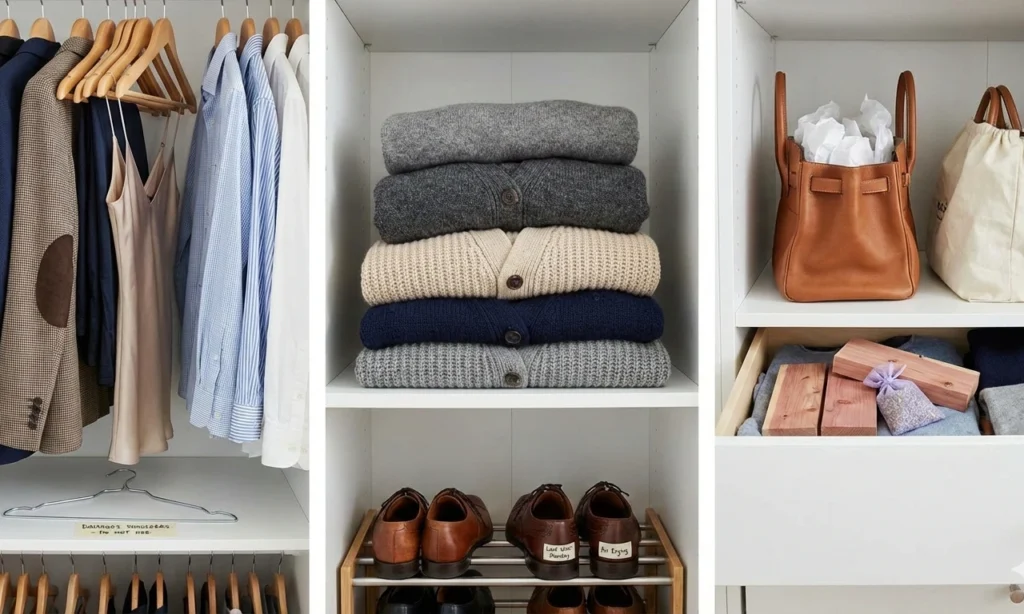
Store off season items properly to extend their life. Clean everything before storage to prevent stains from setting. Use breathable garment bags or containers rather than plastic, which traps moisture and causes mildew. Add cedar blocks to deter moths naturally.
The One Year Wardrobe Challenge
Month 1: Conduct comprehensive closet audit and document findings. Sell or donate items that do not serve you. Calculate cost per wear for pieces you love.
Month 2: Define your lifestyle needs and create a capsule wardrobe plan. Identify exactly which foundation pieces you need versus already own.
Month 3: Invest in your first quality foundation piece, whether jeans, a blazer, or leather shoes. Focus on fit and versatility.
Month 4: Explore thrift stores and consignment shops in your area. Purchase 2 to 3 quality secondhand items to fill wardrobe gaps.
Month 5: Organize a clothing swap with friends. Refresh your wardrobe with zero spending.
Month 6: Invest in your second quality foundation piece. Ensure it coordinates with existing items.
Month 7: Learn advanced styling techniques. Practice creating 10 different outfits from the same 5 pieces through layering and accessory changes.
Month 8: Purchase 2 to 3 transitional pieces that work across multiple seasons. Focus on versatile layers.
Month 9: Take advantage of end of season sales for items needed in upcoming months.
Month 10: Invest in quality accessories that multiply outfit options. Prioritize versatile bags, shoes, or jewelry.
Month 11: Assess progress and identify any remaining gaps. Purchase final foundation pieces needed.
Month 12: Evaluate your complete transformed wardrobe. Calculate total spending, cost per wear averages, and outfit combination possibilities.
Following this systematic approach spreads costs across 12 months while building a cohesive, functional wardrobe. The gradual implementation prevents overwhelm and allows thoughtful purchasing decisions.
Maintenance Strategies for Longevity
Protecting your investment through proper care dramatically extends garment life and reduces long term costs. Industry research shows proper care doubles or triples the useful life of quality pieces.
Washing Best Practices
Washing practices significantly impact longevity. Overwashing causes unnecessary wear and fading. Most items need washing less frequently than assumed. Jeans can go 5 to 10 wears between washes unless visibly soiled. Spot clean small stains and air out between wears.
Sweaters need washing only every 3 to 5 wears. Fold rather than hang to prevent stretching.
Button down shirts last longer with careful washing. Button all buttons, turn inside out, and wash in cold water on gentle cycles.
When washing, use cold water which cleans effectively while reducing color fading and fabric shrinkage. Add a cup of white vinegar to occasional loads to remove detergent buildup and freshen fabrics naturally.
Air drying extends fabric life dramatically. Dryer heat breaks down fibers and causes shrinkage. Hang or lay flat to dry whenever possible.
Proper Storage Methods
Hang structured items like blazers, dresses, and button downs on quality hangers. Wire hangers damage shoulder shapes.
Fold heavy sweaters and knits rather than hanging to prevent stretching.
Store leather goods stuffed with tissue paper to maintain shape. Keep in dust bags when not in use.
Place cedar blocks or lavender sachets in drawers and closets to deter moths naturally without chemical mothballs.
Rotate shoes rather than wearing the same pair daily. Allowing 24 to 48 hours between wears lets leather dry completely and extends shoe life significantly.
Basic Repairs and Tailoring
Learn basic repairs to extend garment life. Replace missing buttons immediately before losing more. Keep small sewing kits handy.
Repair small holes before they enlarge. A quick stitch prevents growing damage.
Restore scuffed leather with appropriate conditioners and polishes.
Professional tailoring transforms fit and extends usefulness. A $20 hem or taking in a waist makes a thrifted or older item feel custom. These alterations cost less than new purchases while achieving better results.
Conclusion and Action Plan
Upgrading your wardrobe in the new year without overspending requires strategic thinking rather than large budgets. Quality over quantity, versatile basics over trendy pieces, and sustainable practices over constant consumption create lasting style at a fraction of traditional costs.
The framework outlined here works because it addresses root causes rather than symptoms. Closet overwhelm stems from poor curation, not insufficient quantity. Style dissatisfaction comes from mismatched lifestyle needs, not inadequate spending. Budget constraints force beneficial creativity when approached strategically.
Start today with your comprehensive closet audit. Understanding what you own and actually wear provides essential foundation for all subsequent decisions. Honesty during this process prevents repeating past mistakes.
Focus on building a cohesive capsule wardrobe that reflects your real lifestyle, not aspirational fantasies. The 30 to 40 versatile pieces approach creates more outfit options than 200 random items ever could.
Embrace sustainable shopping methods that benefit your budget and the planet simultaneously. Thrift stores and clothing swaps provide free or low cost wardrobe refreshes while reducing environmental impact.
Master versatile styling techniques that multiply your wardrobe’s potential. Layering, accessory changes, and creative combinations turn limited pieces into unlimited looks.
Implement the 60/30/10 budget allocation formula to guide spending decisions. Prioritize investment in quality foundation pieces while allowing room for seasonal updates and accessories.
Use the cost per wear calculation before every purchase. This single metric revolutionizes buying decisions by revealing true value versus initial price.
Take a systematic 12 month approach rather than attempting instant transformation. Gradual implementation prevents financial stress while allowing thoughtful curation.
Protect your investment through proper care and maintenance. Simple washing adjustments and storage practices double garment lifespan and reduce long term costs.
Keep This in Mind
Remember that style is personal expression, not financial competition. Your wardrobe should reflect your values, support your lifestyle, and make you feel confident. These goals are absolutely achievable within modest budgets when approached strategically.
The new year offers fresh motivation to upgrade your wardrobe. Use that energy wisely by implementing the frameworks outlined here. Your future self will thank you for the stylish, functional, budget friendly wardrobe you built through intentional choices rather than impulsive overspending.
Start your transformation today. Conduct that closet audit. Plan your capsule wardrobe. Visit your local thrift store. Master one new styling technique. Each small action builds momentum toward your complete wardrobe upgrade, accomplished entirely without overspending.

